
Ready for the classroom
Following two- and three-step directions, managing their own belongings, sitting for a group lesson, putting a hand up, speaking in front of others. The unglamorous skills nobody teaches and everybody expects.
The kindergarten year. We would rather send you a child who wants to know things than one who can recite them.
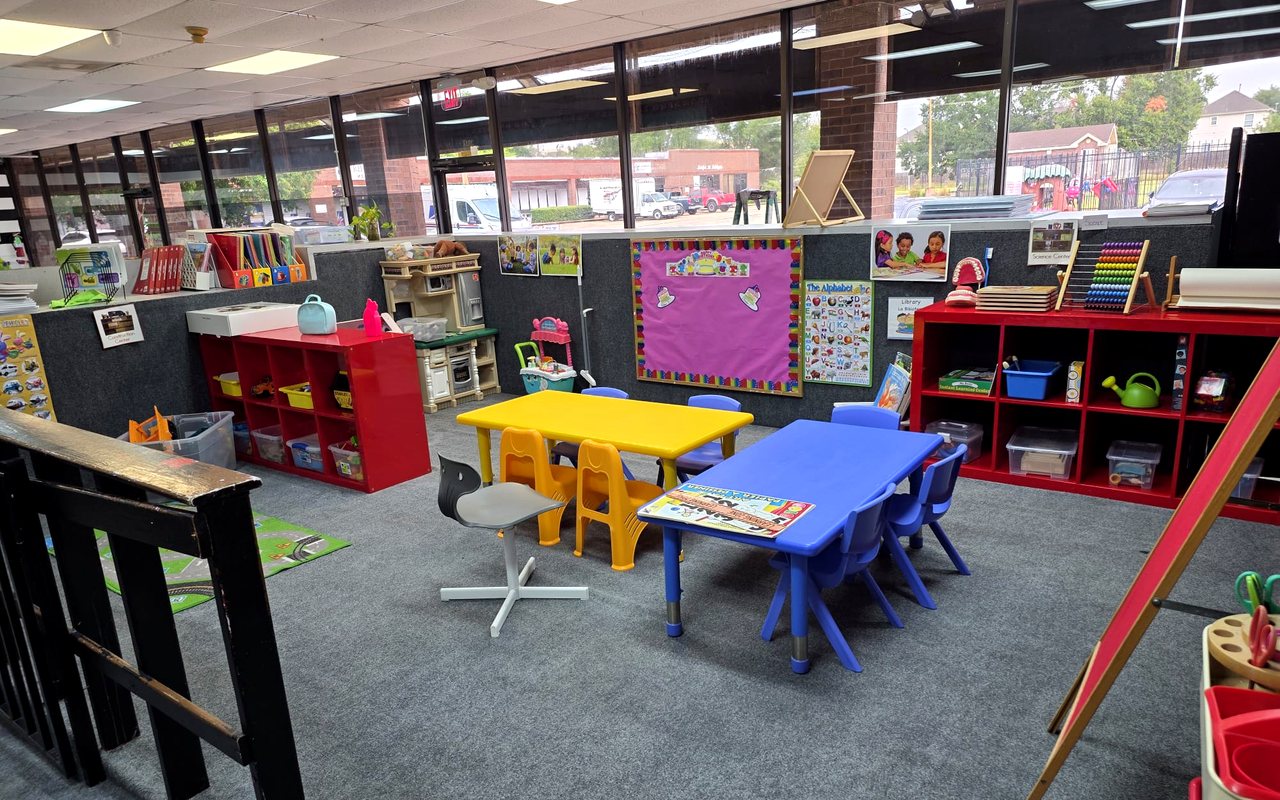
They are the ones who can pay attention, ask for help, wait their turn, manage a wobble without falling apart, and stay curious when something is hard. Those are the things that decide how the first term goes — and they are teachable.
So our Pre-K room builds all of that, and the letters and numbers come with it. We work from the Texas Prekindergarten Guidelines, the same expectations the public schools are working toward, so that your child arrives in August already knowing what their teacher will ask of them.
Following two- and three-step directions, managing their own belongings, sitting for a group lesson, putting a hand up, speaking in front of others. The unglamorous skills nobody teaches and everybody expects.
Letter sounds, blending, writing their name, recognising their name in print, and a great deal of read-aloud. Real early literacy, not flashcards.
Counting with meaning, one-to-one correspondence, comparing quantities, simple addition with objects, patterns and shapes. Understanding the number, not just chanting it.
A dedicated room with computer stations, building and logic games, and posters of the careers those skills lead to. Pre-K children use it for guided projects — supervised, hands-on first, and never as a screen to be parked in front of.
Naming feelings, solving a disagreement with words, recovering from frustration, trying again after getting it wrong. The strongest single predictor of how kindergarten goes.
Cutting, threading, drawing, tearing, moulding. Handwriting is a hand-strength problem long before it is a letter-formation problem.
Doors open — books and table activities.
Breakfast.
Morning meeting: calendar, weather, the plan for the day, and a job for each child.
Small-group literacy instruction and learning centres.
Snack, then outdoor play.
Maths and science, hands-on.
Lunch, family style — serving, pouring and conversation.
Rest time; quiet activities for non-nappers.
Snack, then writing, art or music.
Second outdoor play.
Dinner.
Free choice and wind-down until pickup.
Tours run every day we're open. Walk the classrooms, meet the teachers, ask us anything — no appointment required, though booking ahead means we'll have someone ready for you.