
Sounds before letters
Rhyme, syllables, silly songs and a great deal of reading aloud. Children who can hear how words come apart find reading far easier later — long before they trace a single letter.
Letters, numbers, science and sharing — through play, because that is genuinely how three-year-olds learn.
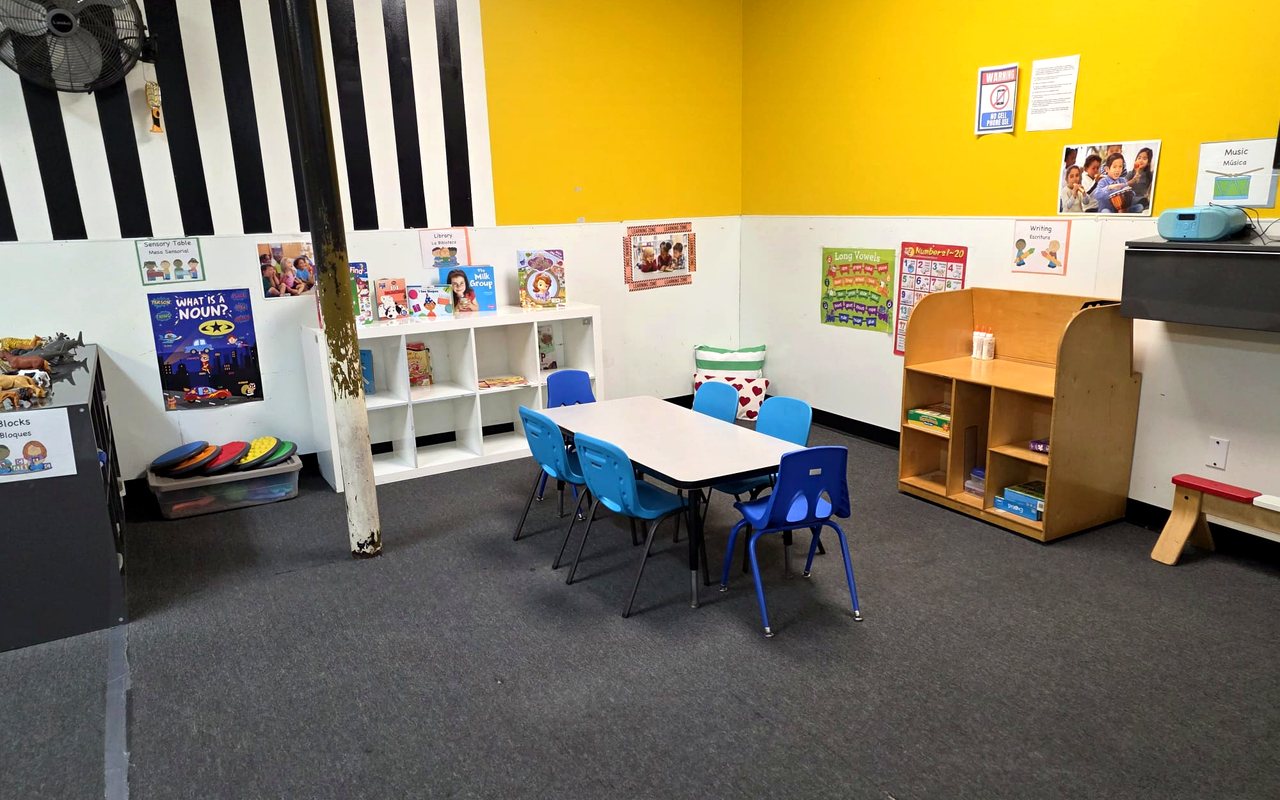
A three-year-old will ask you a hundred questions a day and mean every one of them. That is not a phase to be managed; it is the single best learning tool a person ever owns, and our job is to avoid blunting it.
So the Preschool room runs on real materials and real questions. Children sort, count, mix, plant, build and take apart. Letters and numbers arrive attached to things worth knowing about, and the classroom follows an age-appropriate curriculum aligned to the Texas Prekindergarten Guidelines and the state's early learning guidelines.
Rhyme, syllables, silly songs and a great deal of reading aloud. Children who can hear how words come apart find reading far easier later — long before they trace a single letter.
Counting real things, sorting by colour and size, making patterns, comparing which cup holds more. Numbers make sense when they're attached to something you can pick up.
Planting seeds, mixing colours, sinking and floating, magnets, weather. We ask what they think will happen first, then find out together — being wrong is part of it.
Taking turns, joining a game, using words instead of hands, repairing a friendship after a hard moment. The most important curriculum in the room and by far the hardest.
Open-ended materials rather than twenty identical crafts. Process over product — and the hand strength that makes writing possible a year from now.
Running, climbing, digging, balancing. Gross-motor play isn't a break from learning; it builds the coordination that later sits still and reads.
Doors open — books and table activities.
Breakfast.
Morning meeting: calendar, weather, story, plan for the day.
Learning centres and small-group work with a teacher.
Snack, then outdoor play.
Language and early maths, hands-on and in small groups.
Lunch, family style.
Rest time; quiet activities for non-nappers.
Snack, then science, art or music.
Second outdoor play.
Dinner.
Free choice and wind-down until pickup.
Tours run every day we're open. Walk the classrooms, meet the teachers, ask us anything — no appointment required, though booking ahead means we'll have someone ready for you.